

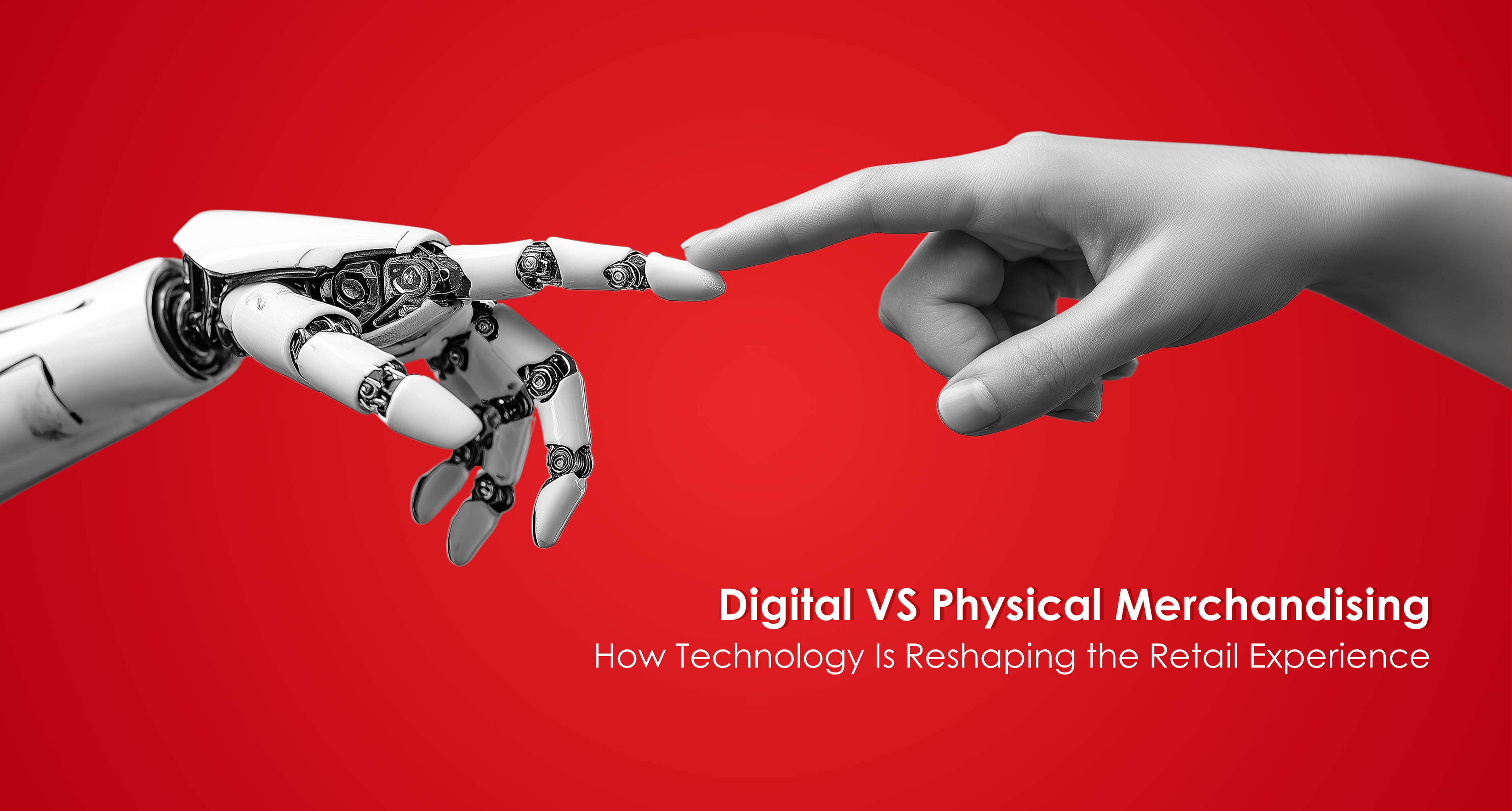
Digital vs Physical Merchandising: How Technology Is Reshaping the Retail Experience
Picture this: you walk into your favorite store. The lights are warm, the playlist hits just right, and every display seems to whisper, “Go ahead, treat yourself.” You planned to buy one thing, but you leave with a bag full.
Later, you’re stretched out on the couch, scrolling through the same brand’s website. Clean layout, smart suggestions, effortless checkout.
Same brand. Totally different vibes.
We’re living in the era of digital vs physical merchandising, where technology is reshaping what shopping even means.
From Shelves to Screens: A Retail Evolution
Merchandising once revolved around perfect window displays, shelf placement, and eye-catching signage. The goal was simple — pull people in and spark impulse buying.
Then the internet changed everything.
E-commerce introduced pixels, algorithms, and data-driven design into the mix. Online stores now use personalization and behavioral insights to influence what you see and buy.
The goal stayed the same: get attention, build desire, and close the sale.
The methods? Completely transformed.
Question to ponder:
Do you trust your own eyes and hands — or an algorithm that knows your habits?
The Digital Storefront: Data Is the New Display
Online, nothing is accidental. Every banner, recommendation, and discount is powered by data.
Behind the scenes:
- AI recommendations analyze clicks and past purchases
- A/B testing constantly improves layouts and messaging
- Dynamic pricing adjusts based on demand and trends
The result? A shopping experience that feels personal — even though it’s driven by technology.
Think about it:
If an algorithm leads you to something you love, who really made the sale?
The Physical Comeback: Experience Is the New Currency
Physical stores aren’t dying — they’re evolving.
Today’s retail spaces focus on immersive experiences:
- AR fitting rooms to try before you buy
- Smart shelves that share info or offers
- Beacons that send personalized deals in-store
- Self-checkout kiosks for faster exits
Shopping becomes less of a task and more of an experience.
So which do you prefer?
An AR-powered store — or shopping in pajamas from your couch?
Phygital Retail: Where Two Worlds Collide
Welcome to phygital retail — the blend of physical stores and digital technology.
You might scan a QR code in-store to order home delivery, or buy online and pick up in person. AR lets you preview furniture at home before purchasing.
This omnichannel approach removes friction and gives shoppers flexibility.
The best brands don’t force a choice — they make everything work together.
Social Commerce: Shopping Goes Viral
Shopping now happens where people spend their time — social media.
Instagram, TikTok, and Pinterest have turned discovery into instant purchase. A single viral video can sell out products overnight.
Physical stores are joining in too — selfie walls, QR codes, and social-ready moments designed for sharing.
Quick challenge:
Count the “Shop Now” buttons on your favorite app.
Sustainability Meets Technology
Modern shoppers care about the planet — and technology is helping retailers respond.
- AI reduces overstock and waste
- Blockchain tracks ethical sourcing
- Digital catalogs reduce paper usage
- Smart packaging shares sustainability data
The big question:
Can digital shopping truly be green with servers and delivery vehicles still consuming energy?
The Road Ahead: A Hybrid Future
Imagine walking into a store where lighting adapts to your mood, displays sync with your wishlist, and checkout happens without stopping.
It sounds futuristic — but many retailers are already testing this reality.
The future of merchandising isn’t digital or physical.
It’s both.
A Final Thought
Technology hasn’t replaced human connection — it’s amplified it.
Brick-and-mortar stores create emotion. Digital platforms deliver convenience. Together, they form something stronger.
Riddle time:
I live in your pocket and on your street,
I know what you want before we meet.
I sell you dreams both near and far —
Who am I, digital or physical star?
(Hint: Probably both)
So next time you shop — ask yourself:
Are you a digital shopper, a physical one… or a mix of both?
FAQs
What’s the real difference between digital and physical merchandising?
Digital merchandising uses data, algorithms, and UX design. Physical merchandising relies on layouts, sensory cues, and in-person interaction.
What is phygital retail?
Phygital blends physical stores with digital tools like AR, QR codes, and omnichannel experiences.
How does technology improve retail?
It personalizes experiences, provides real-time insights, enables automation, and adds immersive engagement.
Where does social commerce fit in?
Social commerce allows users to discover and buy products directly from social platforms.
Is online shopping really more sustainable?
Not always. While it reduces paper, logistics and energy use still matter. True sustainability requires balance.



Leave a comment: