

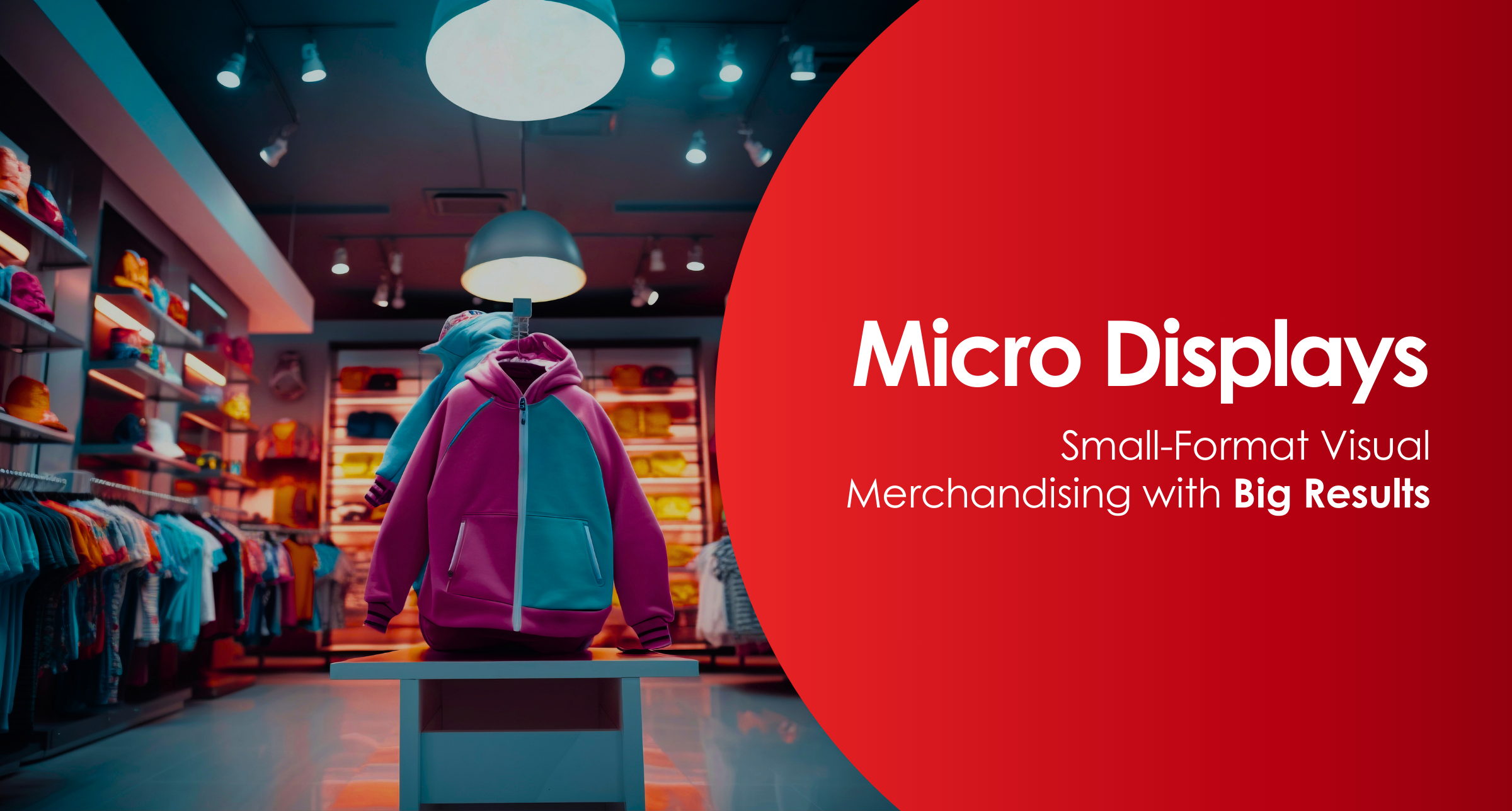
Micro Displays: Small-Format Visual Merchandising with Big Results
Walk into any busy store and you’ll see shelves packed with products, but sometimes the real magic happens in the small moments. That’s where micro displays come in.
These compact merchandising units don’t try to show everything. Instead, they create eye-catching moments right when shoppers are about to make a decision—at the checkout, the aisle end, or the counter.
Think of a snack rack near billing, a sleek skincare kit on the counter, or a limited-edition gift set on a small end-cap. They don’t take much space, but they know exactly how to grab attention.
When done right, micro displays drive impulse purchases, boost brand visibility, and make shopping feel intentional.
Why Micro Displays Matter — The Real Reason They Work
Visual merchandising isn’t just about aesthetics—it influences buying behavior.
Micro displays work because they align with how shoppers think. Many buying decisions happen inside the store, driven by placement, visibility, and simplicity.
- Small displays and end-caps consistently outperform regular shelving
- Impulse zones like checkout counters encourage last-minute purchases
- Clear, clutter-free displays reduce decision fatigue and speed up buying
In short, micro displays create high-impact moments that quietly influence what lands in the cart.
How to Nail a Micro Display: The Essentials
1. Put Them Where It Counts
Placement is everything. Micro displays work best in high-pause zones:
- Checkout counters
- End-of-aisles
- Store entrances
- Beside complementary products
If shoppers don’t naturally stop there, the display won’t perform.
2. Keep It Simple and Focused
Limited space means zero room for clutter. Use:
- Clean layouts
- Minimal messaging
- Eye-level product placement
Overloading kills impact. Focus beats variety.
3. Choose Products That Pop (and Work Together)
Micro displays are perfect for:
- New product launches
- Seasonal items
- High-margin products
- Impulse-friendly SKUs
Cross-merchandising works especially well—group products that naturally belong together.
4. Hit the Senses and Tell a Story
Lighting, colors, textures, and signage all add emotional pull.
A well-designed micro display instantly signals value and quality, making products feel special and worth grabbing.
5. Refresh Often
One of the biggest advantages of micro displays is flexibility.
Rotate products weekly for promos, monthly for seasons, or anytime trends shift. Fresh displays keep shoppers curious.
Types of Micro Displays and When to Use Them
End-Cap, Side-Cap, or Mini Aisle Displays
Best for: Promotions, launches, and seasonal collections. These displays stop shoppers mid-walk and drive impulse decisions.
Countertop or Checkout Displays
Best for: Last-minute add-ons like snacks, accessories, travel-size items, or small gifts.
Floor-Standing Gondolas or Mini Islands
Best for: Highlighting a niche category or brand without competing for full shelf space.
Popup or Capsule-Style Displays
Best for: Limited-time campaigns, festive collections, or exclusive drops that create urgency.
How Micro Displays Give Retailers an Edge
- Higher sales per square foot
- Better inventory control with fewer SKUs
- Stronger brand storytelling
- Increased impulse and cross-selling
- Low-cost testing for new ideas
Micro displays are easy to move, quick to update, and ideal for experimentation.
Common Mistakes to Avoid
- Overcrowding the display with too many products
- Poor placement with low foot traffic
- Neglecting upkeep and cleanliness
- Cluttered or confusing signage
- Never refreshing the display
Treat micro displays as living tools, not permanent furniture.
A Real Example: Small Brand, Big Impact
A small indie skincare brand with limited shelf space used micro displays strategically:
- Checkout countertop displays with top-selling serums
- Mini end-caps near related skincare categories
- Seasonal pop-up gift sets during festivals
Instead of competing on crowded shelves, they created focused moments that converted.
FAQs
What is a micro display in retail?
A small-format display designed to highlight a limited number of products for promotions, impulse buys, or seasonal focus.
Why do micro displays outperform regular shelving?
They’re placed in high-traffic areas, simplify choices, and trigger impulse buying.
Are micro displays only for small stores?
No. Large retailers use them to maximize space, test campaigns, and increase revenue per square foot.
What products work best in micro displays?
Impulse items, gifts, seasonal products, accessories, new launches, and high-margin SKUs.
How often should micro displays be refreshed?
Every 2–6 weeks to maintain novelty and customer interest.


Leave a comment: