
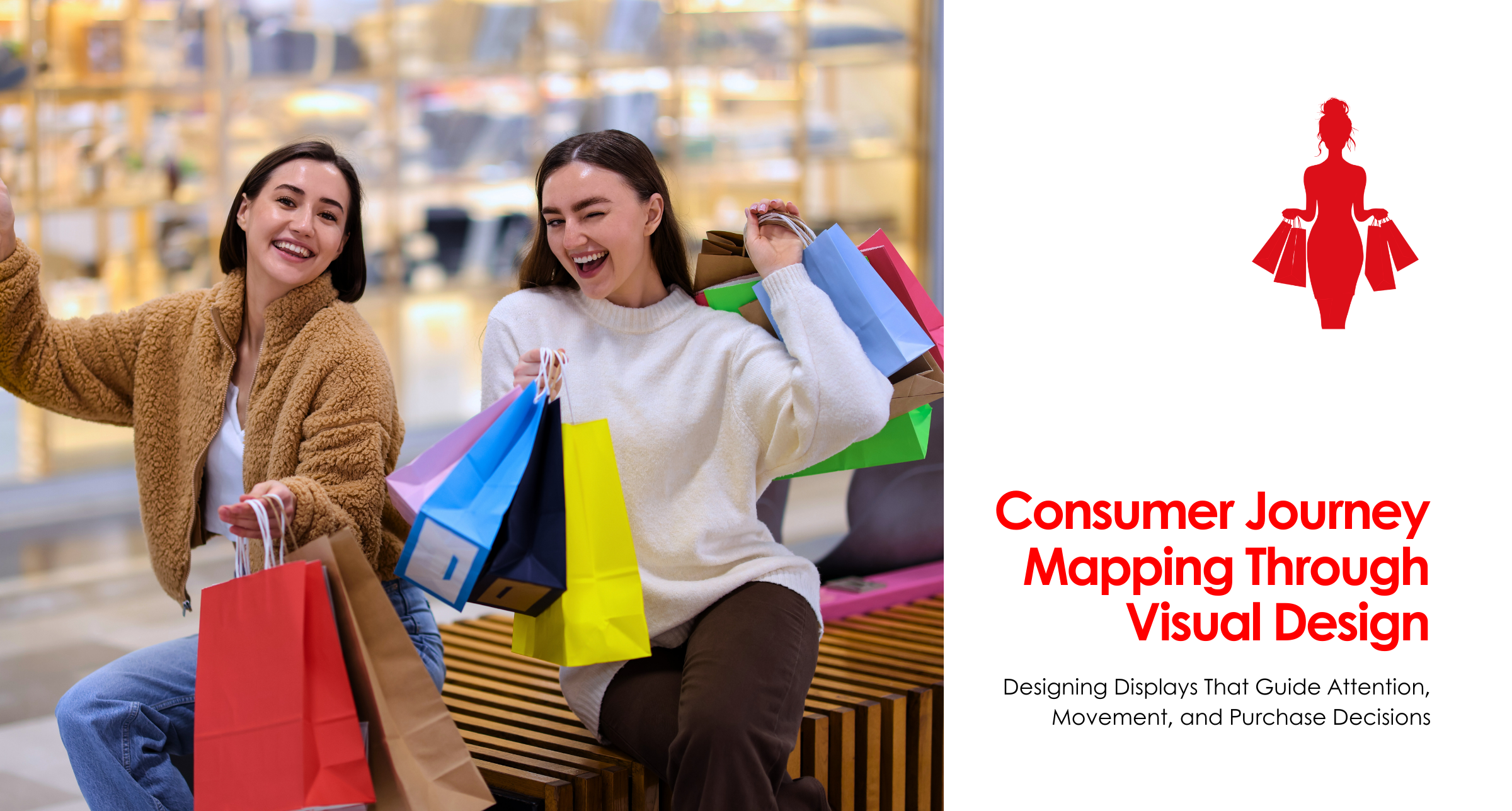
Walk into a well-designed store and something clicks. You don’t need to search for signs or ask for help. Your eyes land where they’re supposed to. Your feet follow. Before you know it, you’re picking up products you didn’t plan on buying.
That’s not luck. That’s visual design guiding your journey from the moment you step inside.
Great visual design isn’t just about aesthetics. It shapes behavior—what people notice, how they move, how long they stay, and ultimately, what they buy.
Consumer journey mapping is about understanding every step a customer takes—from the first glance at your store to the final purchase and exit.
In visual merchandising, this means designing for:
Every visual element becomes a quiet guide, steering customers almost invisibly.
People don’t shop with spreadsheets. They shop with instincts and emotions.
Before reading a price tag or product label, customers react to:
Good visual design removes friction, making shopping feel easy, intuitive, and enjoyable.
The entrance is your first—and best—chance to hook people.
Window displays, entry tables, and lighting should instantly communicate:
Bold visuals, strong contrast, and a clear story create that initial pull.
Once inside, shoppers don’t want instructions—they want flow.
Visual design creates natural pathways by shaping how people move.
Customers naturally:
Floor patterns, colour shifts, signage, and spotlighting subtly guide movement without saying a word.
When every display screams for attention, shoppers stop looking. Too much visual noise makes a store feel stressful, and a stressed customer is one who leaves empty-handed.
The Rule of Thumb: If a shopper has to stop and think about where to look first, there is too much noise. Give the eye a place to land, then a path to follow.
Not all areas of a store carry equal weight.
High-impact zones include:
These spaces should highlight hero products, tell a clear story, and make value instantly obvious.
Grouping products by lifestyle, solution, or need helps customers understand faster—and decide quicker.
This is where visual design meets psychology.
Effective visual cues that close the deal include:
A great display removes doubt and builds trust—both critical at the moment of purchase.
Storytelling ties the whole experience together.
Instead of just stacking products, great displays:
People don’t just buy products—they buy possibilities. Emotional stories linger long after they leave the store.
Visual consistency creates comfort.
Using the same:
across zones and stores builds familiarity—and familiarity speeds up buying decisions.
Modern visual merchandising is data-informed, not guesswork.
Brands now use:
This data helps refine layouts, reposition displays, and continuously improve the customer journey.
The strongest journeys always put the customer first.
It’s the process of designing visual touchpoints that guide how customers move, engage, and decide inside a physical space.
It directs attention, reduces confusion, builds comfort, and makes decisions easier—leading to higher conversions.
No. It works for boutiques, pop-ups, showrooms, exhibitions, and even office environments.
Ideally every season or after major campaigns, using customer behaviour data to guide changes.
Yes. A smooth, intuitive journey reduces friction and increases confidence—both of which drive purchases.
GENERAL INQUIRIES
info@gmdrfoundation.com
SOCIAL MEDIA
WhatsApp us

Leave a comment: