
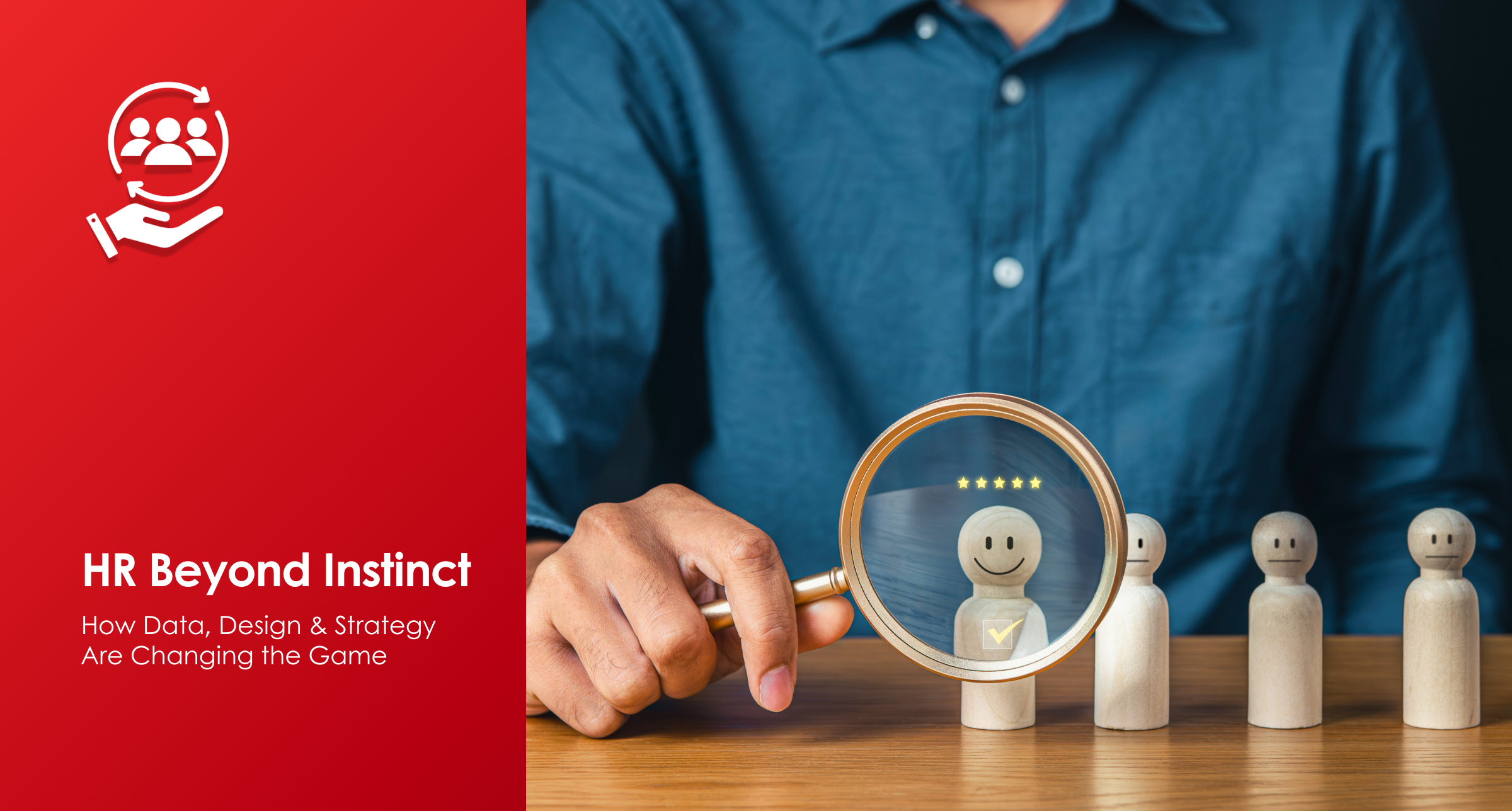
HR Beyond Instinct: How Data, Design, and Strategy Are Changing the Game
For a long time, Human Resources ran on gut feeling. Experienced leaders simply “knew” who would thrive, who deserved a promotion, or who might walk out the door. And instinct still matters—people aren’t spreadsheets.
But today’s workplace is far more complex. Hybrid teams, global workforces, skill shortages, and rising employee expectations have raised the stakes. Relying only on instinct just doesn’t work anymore.
HR decisions now directly impact productivity, engagement, and brand reputation. One wrong hire, a poorly designed policy, or a missed warning sign can ripple across the entire organization.
This is why HR is evolving—moving beyond instinct and blending data, design thinking, and strategic planning to make smarter, fairer, and more human decisions at scale.
Why HR Needs More Than Instinct
Instinct is shaped by personal experience—and no leader’s experience tells the full story. In growing organizations, it’s impossible to see everything.
Research from Deloitte shows that organizations using people analytics see improvements in retention, leadership pipelines, and overall business performance.
Data uncovers what instinct can miss:
- Turnover blamed on pay, when burnout or workload is the real issue
- Hiring that looks successful until analytics reveal new hires struggling months later
- Engagement that appears healthy, while pulse surveys expose hidden team-level issues
Data-backed HR replaces assumptions with evidence—without removing empathy.
Turning Data Into Real Impact
Modern HR analytics goes far beyond headcount and turnover charts. It reveals patterns in behavior, performance, and potential.
1. Hiring and Talent Acquisition
Recruitment analytics show which sourcing channels deliver top performers, how long new hires take to ramp up, and where bias enters the hiring process.
2. Retention and Engagement
Employees rarely leave without warning. Engagement data, learning activity, internal mobility, and feedback patterns highlight risk long before resignation emails arrive.
3. Performance and Productivity
Analytics connects goals, feedback, learning, and outcomes—offering a fuller picture than once-a-year performance reviews.
4. Workforce Planning
Data helps forecast future skill needs, identify roles at risk of change, and determine when reskilling makes more sense than hiring externally.
When used responsibly, data strengthens HR’s ability to advocate for employees—not just manage them.
Design Thinking: Rethinking the Employee Experience
If data explains what’s happening, design thinking explains how work actually feels.
Design-led HR puts employees at the center of every process, shifting focus from efficiency alone to experience.
This approach transforms:
- Onboarding into a guided, welcoming journey
- Learning into personalized, relevant growth paths
- Performance reviews into continuous conversations
- Policies into flexible systems that reflect real life
According to Harvard Business Review, organizations that apply design thinking in HR see higher adoption, stronger trust, and improved engagement.
When design is done right, employees feel supported—not managed.
Strategic HR: Aligning People and Business
Modern HR isn’t just operational—it’s strategic.
Strategic workforce planning ensures talent development aligns with business direction, helping organizations stay ahead instead of reacting to gaps.
This means focusing on:
- Future skills, not just current vacancies
- Internal mobility instead of constant external hiring
- Succession planning across all critical roles
- Scenario planning for growth, disruption, or uncertainty
Gartner research shows organizations strong in workforce planning adapt faster and face fewer talent risks.
When HR strategy and business strategy align, growth becomes intentional—not accidental.
Technology That Makes HR More Human
AI, automation, and modern HR platforms are accelerating this shift—but technology alone isn’t the solution.
The most effective HR teams use tech to:
- Automate repetitive, low-value tasks
- Improve decision quality through insights
- Free up time to focus on people, coaching, and culture
Technology doesn’t replace the human side of HR—it strengthens it.
Final Thoughts
The future of HR isn’t about choosing between instinct and data.
It’s about using insight, design, and strategy together—with intention.
When HR moves beyond instinct, it doesn’t just manage people. It builds workplaces where individuals and businesses grow together.
FAQs
What does “HR beyond instinct” really mean?
It means balancing human judgment with data, thoughtful design, and strategic decision-making—so choices are informed, fair, and scalable.
Is people analytics only for large organizations?
No. Even small teams can use engagement surveys, turnover tracking, and skills mapping to make smarter decisions.
How does design thinking improve HR?
By focusing on employee experience, HR processes become more usable, trusted, and effective.
Does data-driven HR feel cold or robotic?
When done right, it feels fair and transparent—reducing bias and building trust.
What’s the best way to get started?
Start with one problem—turnover, hiring quality, or engagement. Analyze the data, identify patterns, and take targeted action.

Leave a comment: