Point of sale displays in South India: a buyer’s guide
The right retail display placed at the right location in a store can measurably shift buying behaviour. Sourcing a reliable point of sale display in South India, however, is less straightforward than it should be. The wrong vendor wastes budget, misses campaign deadlines, and delivers inconsistent quality across locations. For brands operating across South India, from fashion and beauty retail to food and lifestyle, finding a dependable POSM production partner takes real groundwork. Most suppliers are strong at one part of the workflow: printing, or fabrication, or logistics. Fewer handle all of it under one roof.
This guide covers display types, materials, price benchmarks, lead times, and the South India vendors worth shortlisting. If you have been searching for a production team that can take a brief from design to installation, GDMR Foundation in Thiruvananthapuram offers an integrated capability that retail branding teams working across southern markets will find worth evaluating. More on that shortly.
Which point of sale display do South India stores actually need?
Matching display format to your retail environment
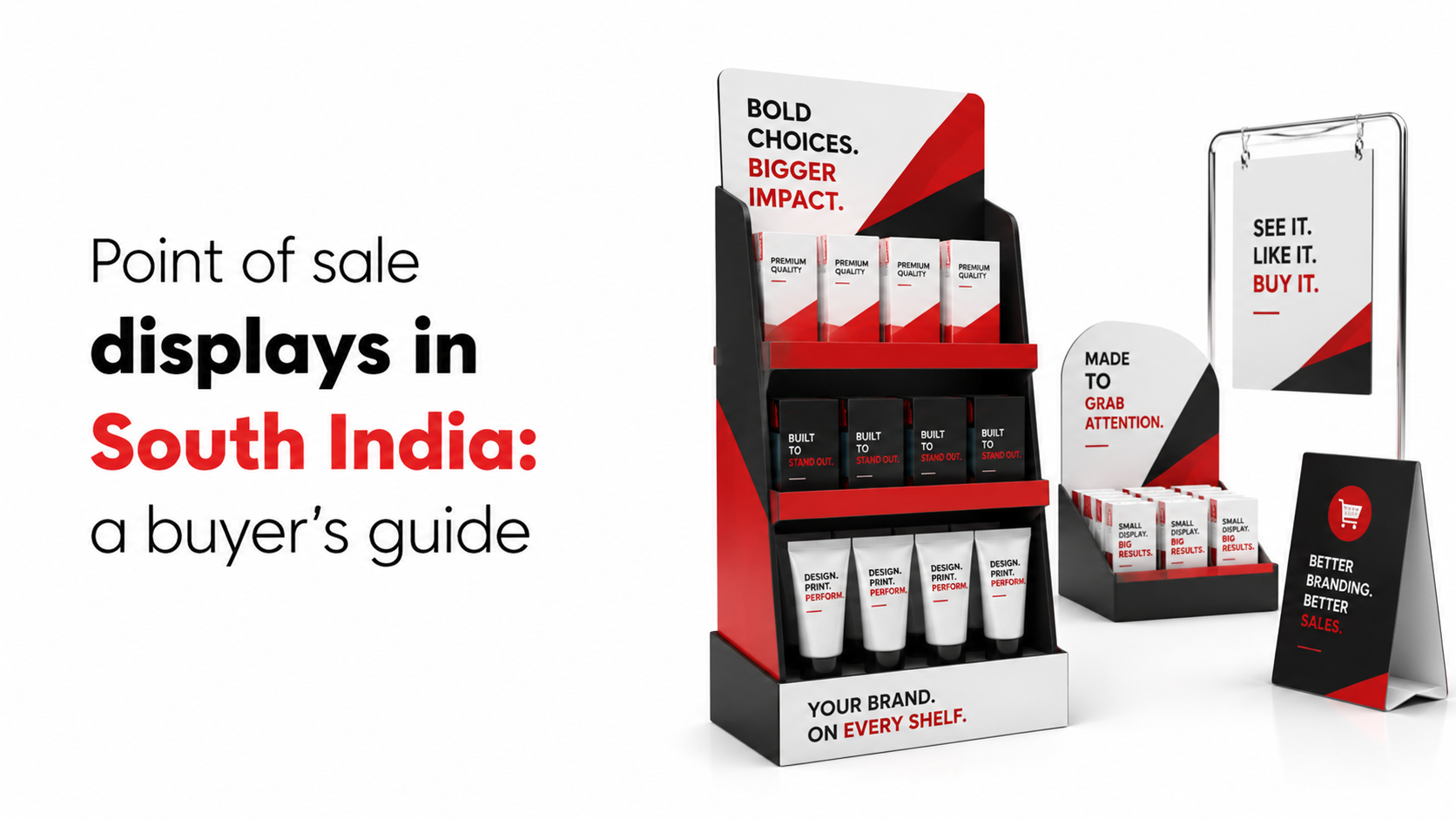
The primary categories to understand are floor-standing display units, counter-top units, shelf talkers, gondola end-caps, dump bins, and branded counters. The format should be driven by floor space, traffic flow, and product type, not by what looks impressive in a catalogue. A fashion accessory counter needs a different structure than a beauty product floor stand. A dump bin works for high-replenishment impulse items; it is the wrong choice for a skincare brand positioning on premium.
Temporary vs semi-permanent vs permanent fixtures
Campaign duration determines almost every other specification in your brief. Short-term promotions running two to eight weeks call for lightweight, cost-efficient builds. Seasonal displays lasting three to six months need sturdier substrates and more durable finishes. Permanent fixtures require materials and construction methods that can handle daily replenishment, cleaning, and retail traffic for a year or more. The durability requirement, material choice, and budget all shift dramatically across these three categories, and this decision shapes everything you brief the supplier on before a single sheet is printed.
Indoor retail vs semi-outdoor placements
A display inside a climate-controlled store faces different stresses than one placed near an entrance, forecourt, kiosk, or covered semi-outdoor zone. Semi-outdoor placements face moisture, handling pressure, and light exposure that will destroy a cardboard-based build within weeks. Cardboard-based displays fail quickly in these environments; moisture alone degrades the structure within days in Kerala and coastal Tamil Nadu. The structural and material brief changes entirely once you move outside the controlled retail floor, and suppliers who do not ask about placement location before quoting are a warning sign.
Materials and finishes: what to specify before briefing a supplier
Indoor display materials matched to campaign duration
For short-run promotions, corrugated board and e-flute are the standard substrates: cost-effective, light, and quick to produce. Mid-term display units typically use PVC foam board, acrylic, or PETG, which offer better rigidity and a more premium finish. Permanent fixtures move into MDF, metal, and mixed-material constructions where load-bearing capacity and long-term durability matter more than unit cost. Match the material to the product weight the display needs to carry and the duration it needs to last; those two variables will steer most of your substrate decisions.
Semi-outdoor material and structural specifications
For semi-outdoor or high-traffic placements, specify rigid and weather-resistant substrates: PVC foam, acrylic, polycarbonate, aluminium composite panels (ACP), and treated metal or timber frames. Standard indoor-spec materials are simply not suitable here; in humid coastal climates, degradation can be rapid. Minimum structural specs for semi-outdoor use should include moisture-resistant face panels and a rigid sub-frame. Never accept a quote that applies indoor-spec materials to an outdoor-adjacent placement without challenge.
Print finishes that protect and present the display well
UV printing on rigid substrates delivers sharp colour and surface durability on acrylic and PVC foam counter units. Gloss lamination on cardboard floor stands adds protection and visual punch for seasonal campaign builds. Matte lamination, UV varnish, satin coatings, and lacquer finishes serve different brand aesthetics and functional needs. A premium jewellery counter warrants UV-printed acrylic with a polished finish; a fast-moving FMCG floor stand in a hypermarket is well served by a direct print with gloss lamination. Brief your supplier on the finish you want rather than leaving that decision to the production team.
What point of sale display units cost in South India: prices and MOQ
Cardboard floor stands: budget range and ordering minimums
Cardboard and corrugated floor stands are the entry-level format for promotional campaigns. Basic promotional units in India are typically priced between approximately ₹500 and ₹3,500 per piece, based on market benchmarks from major trade platforms. Branded or structured floor stands with better print quality and more complex construction range from ₹3,750 to ₹12,000 or higher. MOQ from most South India suppliers is 1 to 10 units, making this format accessible even for trial or single-location activations. For short campaigns where cost per impression matters most, cardboard builds offer the most efficient spend.
Acrylic counter units: mid-range pricing
Acrylic counter display units, shelved, tiered, or custom-shaped, typically range from ₹2,250 to ₹25,000 per unit depending on size, shelf count, and fabrication complexity. These are the preferred format for beauty, jewellery, and accessories retail where the display needs to reflect the product's premium positioning. For structural integrity, counter-display acrylic panels are generally specified at 4 to 12 mm thickness depending on the shelf load, with 10 kg per shelf serving as a practical working specification for standard cosmetics or accessories counter units. MOQ is generally 1 to 5 units from South India fabricators.
Metal and rigid display structures: pricing for durability
Metal shelving and rigid display stands range from approximately ₹5,000 for smaller POS stands to ₹35,000 or more for larger promotional fixtures, gondola end-caps, or custom-fabricated branded counters. Metal units typically carry 50 to 100 kg total capacity depending on frame gauge and construction, making them the right choice when the display must hold heavier stock or survive regular replenishment handling. The higher upfront cost is justified when the fixture will operate for a year or more across busy store locations.
Lead times for POSM orders of 50 to 500 units
Design, sampling and approval: the phase most buyers underestimate
For a custom brief, the design and development phase takes 3 to 7 working days for straightforward concepts and up to 2 to 3 weeks when revisions are involved. Prototype or first-sample production typically adds another 3 to 15 working days depending on complexity. Buyers who skip or rush this phase often end up with production units that deviate from approved artwork or require expensive corrective runs. The sample approval stage is where problems are cheapest to fix; do not treat it as optional to save time.
Production and delivery timelines by order volume
For orders of 50 to 100 units with a defined design and standard substrates, expect 2 to 4 weeks for production. Orders of 200 to 300 units typically run 3 to 5 weeks for standard cardboard or acrylic builds and 5 to 8 weeks for custom or finish-heavy designs. At 500 units, standard builds take 4 to 6 weeks, while tooling, special finishes, or multiple approval rounds push that to 8 weeks or more.
Intercity freight or installation coordination across South India adds a further 1 to 2 weeks on top of production time. Build this buffer into your campaign calendar before you request the first quote, not after it arrives.
POSM suppliers and manufacturers across South India
Vendors operating in Bangalore, Chennai, and Hyderabad
The major South India metros have identifiable suppliers across different parts of the point of sale display production chain. In Bangalore, POM Systems and Services operates from the Peenya Industrial Area with branches extending to Chennai and Kochi. Poshop Systems and Annapurna Technologies serve the Bangalore market with POS system infrastructure. In Chennai, Allmark Scales, Rkv Solutions, and the POM Systems branch in Little Mount handle regional requirements. Hyderabad has Decision Support Systems India and the POM Systems branch network. National POSM players such as Brandola, Karabinesh, Earth Tribe Inc, and Leo-Plast serve South India markets remotely, focusing on gondola, counter, and floor display formats typically supplied through distribution networks.
The practical limitation of most of these vendors is that they are strong at one part of the chain: POS systems, POSM supply, or printed output. Fewer manage the full production workflow from printing through fabrication, finishing, and on-ground installation. For multi-location retail campaigns, that coordination gap creates its own costs and timeline risks.
GDMR Foundation: integrated point of sale display production from Thiruvananthapuram
GDMR Foundation is positioned as a full-workflow option for retail brands and agencies that need more than a printed banner or a flat-packed stand delivered to a loading dock. The stated production capability covers commercial digital printing, UV printing on acrylic and rigid substrates, large-format output, precision CNC and laser cutting, fabrication of counters and display structures, lamination, finishing, packing, and on-ground installation across South India.
For multi-location retail brands running campaigns across Kerala, Tamil Nadu, Karnataka, Telangana, or Andhra Pradesh, an integrated production setup of this kind means one brief, one approval process, and consistent output, rather than coordinating separately between a printer, a fabricator, and an installation team. For the brand, this translates to fewer handoffs, tighter timelines, and a single point of accountability from brief to rollout. For brands expanding from North India into southern markets, a single South India production and execution partner can simplify vendor management considerably.
How to get quotes and samples without wasting time
What to include in a supplier brief that gets accurate quotes
A precise brief saves two to three rounds of back-and-forth and prevents price inflation from scope ambiguity. Every brief should cover: display type and format, dimensions, quantity, substrate and finish preference, campaign duration, artwork status, delivery location or locations, installation requirement, and desired lead time. Beyond those basics, specify the retail environment, whether artwork is print-ready or still in revision, and who approves samples on your side. Brands that supply approved artwork files and clear structural references receive quoted timelines and prices faster and more accurately than those briefing verbally.
Red flags to watch for when evaluating a vendor
Watch for suppliers who quote without asking about campaign duration or product weight; this signals they are under-specifying the substrate. Vendors who cannot provide a physical sample or prototype before full production are another concern, particularly for custom structural builds. Suppliers with no in-house finishing or assembly capability outsource critical steps, which introduces quality and timeline variables they cannot fully control. The safer benchmark is a supplier who treats the brief as the start of a production consultation, not just a print order.
- No questions about product weight or campaign duration in the first response
- Inability to provide a physical sample before bulk production
- No in-house finishing, cutting, or assembly capability
- No experience managing multi-location delivery or on-site installation
- Quotes based on verbal descriptions rather than written specifications
The decision sequence that saves your next campaign
Start by choosing the right display type for your retail environment. Then match the material and finish to campaign duration and placement conditions, indoor versus semi-outdoor, short-run versus permanent. Use the pricing benchmarks in this guide to set a realistic procurement budget before approaching suppliers. Finally, build the full production timeline into your campaign calendar at the outset, accounting for design, sampling, production, and freight.
For brands sourcing a point of sale display across South India and wanting a single partner to manage the entire process, from brief to on-ground installation, GDMR Foundation is worth contacting early in your planning cycle. Reaching out before timelines tighten gives the team enough lead time to produce and approve a sample before your campaign launches, which is where most rollout surprises are avoided.
FAQs:
Q: What types of point-of-sale displays should I consider for stores in South India?
A: Core formats are floor-standing display units, counter-top units, shelf talkers, gondola end-caps, dump bins, and branded counters. Choose the format based on floor space, traffic flow, and product type rather than catalogue appeal — for example, a fashion accessory counter differs from a beauty product floor stand.
Q: How do I decide between temporary, semi-permanent, and permanent fixtures?
A: Base the choice on campaign duration: 2–8 week promotions need lightweight, cost-efficient builds; seasonal displays (3–6 months) require sturdier substrates and finishes; permanent fixtures demand durable materials and construction for year-round use. Durability, material selection, and budget shift dramatically across these categories and should be finalized before briefing suppliers.
Q: Which materials work best for indoor short-run versus permanent displays?
A: Short-run indoor promotions typically use corrugated board and e-flute for cost and speed. Mid-term units commonly use PVC foam board, acrylic, or PETG for better rigidity and finish, while permanent fixtures move to MDF, metal, or mixed-material constructions to handle load, cleaning, and daily use.
Q: What materials and construction should I specify for semi-outdoor placements in coastal South India?
A: For semi-outdoor or high-traffic zones specify rigid, weather-resistant substrates such as PVC foam, acrylic, polycarbonate, aluminium composite panels (ACP), and treated metal or timber frames. Cardboard-based displays fail quickly in humid coastal climates like Kerala and coastal Tamil Nadu, so indoor-spec materials are not suitable.
Q: What should I expect for lead times and pricing when sourcing POS displays in South India?
A: Lead times and prices vary by complexity, material, and whether the supplier handles printing, fabrication, and logistics in-house; short-run corrugated builds are fastest and cheapest, while mixed-material permanent fixtures take longer and cost more. Provide clear briefs on placement, duration, and load requirements to get accurate quotes and realistic lead times.
Q: How do I shortlist a reliable POSM production partner in South India?
A: Look for suppliers who cover the full workflow you need — printing, fabrication, and logistics — or an integrated partner that can take a brief from design to installation. Beware vendors who don’t ask about placement location or campaign duration; inconsistent quality and missed deadlines are common when responsibilities are fragmented.
Q: Is a dump bin a good choice for premium skincare or beauty brands?
A: No — dump bins are suited to high-replenishment impulse items and not to premium skincare positioning. Premium beauty brands should use more structured, refined fixtures that convey value and protect product presentation.


Leave a comment: