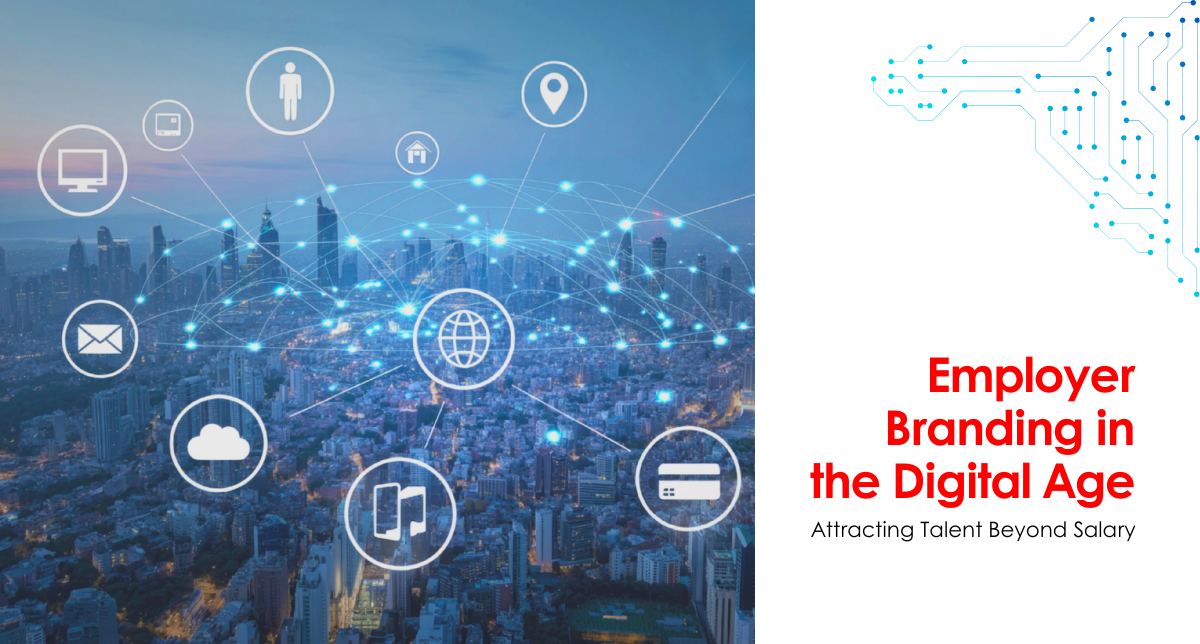
Employer Branding in the Digital Age: Attracting Talent Beyond Salary
Not too long ago, offering a stable job and a decent salary was enough to attract talented professionals. Today, that’s no longer enough.
While compensation still matters, employees now look for something deeper—purpose, growth opportunities, flexibility, inclusion, and meaningful work. People want to join organizations that align with their values and create experiences that feel human.
In the digital age, employer branding has become one of the most important factors in attracting and retaining top talent.
Employee reviews, social media posts, workplace stories, and online reputation now shape how candidates view a company long before they ever apply.
Why Employer Branding Matters
Modern job seekers research companies carefully before applying.
They explore:
- Employee reviews on platforms like Glassdoor
- Company culture shared on social media
- Leadership presence online
- Career growth opportunities
- Workplace flexibility and employee wellbeing
A strong employer brand helps organizations:
- Attract stronger candidates
- Reduce recruitment costs
- Improve employee retention
- Build trust with future employees
- Create long-term workforce loyalty
Employer branding is no longer about advertising open positions. It is about creating an authentic reputation as a place where people genuinely want to work.
What Modern Talent Really Wants
Salary remains important, but employees increasingly prioritize workplace experience.
Today’s workforce values:
- Meaningful and purpose-driven work
- Career development opportunities
- Flexible work arrangements
- Inclusive and respectful workplace cultures
- Mental and physical wellbeing support
- Recognition and growth opportunities
Employees often leave organizations not simply because of money, but because they feel disconnected, undervalued, or unable to grow.
Pillar One: Build an Authentic Workplace Culture
Authenticity is the foundation of a strong employer brand.
Employees quickly recognize when company values do not match reality.
Organizations should focus on:
- Creating transparent communication
- Encouraging innovation and openness
- Supporting diversity and inclusion
- Listening to employee feedback
- Living company values consistently
Culture is not a slogan on a wall. It is reflected in daily experiences, leadership behavior, and how employees feel inside the organization.
Pillar Two: Strengthen Your Digital Presence
For many candidates, the first interaction with a company happens online.
Your digital presence should reflect the real employee experience.
Important platforms include:
- Glassdoor
- Career websites
- Employee-generated content
Instead of polished corporate messaging alone, organizations should highlight authentic employee stories, workplace experiences, and leadership perspectives.
Strong digital employer branding helps attract even passive candidates who are not actively searching for jobs.
Pillar Three: Focus on Employee Experience
Employer branding extends far beyond recruitment marketing.
Every stage of the employee journey shapes how people view your organization.
This includes:
- The application process
- Onboarding experiences
- Daily work culture
- Learning and growth opportunities
- Recognition and support
- Exit experiences
Employees who feel respected and supported often become powerful advocates for the organization.
Pillar Four: Give Employees a Sense of Purpose
People want to understand why their work matters.
Organizations with strong employer brands connect employee roles to a larger mission and impact.
Companies should:
- Clearly communicate organizational purpose
- Show how employee contributions matter
- Align company values with actions
- Create opportunities for meaningful work
Purpose-driven workplaces often create stronger engagement and loyalty.
Pillar Five: Use Data to Improve Employer Branding
Employer branding should be measured and improved continuously.
Organizations can use data to understand:
- Candidate engagement trends
- Application drop-off points
- Employee satisfaction levels
- Retention patterns
- Online reputation and reviews
Analytics help organizations identify gaps and improve both recruitment and employee experience strategies.
The Role of Leadership in Employer Branding
Leadership strongly influences how employees and candidates perceive an organization.
Effective leaders:
- Communicate openly
- Represent company values consistently
- Build trust internally and externally
- Create transparent workplace cultures
Authentic leadership strengthens employer reputation and employee confidence.
Common Employer Branding Mistakes
1. Inauthentic Messaging
When company messaging does not match reality, employees and candidates quickly lose trust.
2. Ignoring Employee Feedback
Negative reviews and concerns should be addressed honestly and constructively.
3. Inconsistent Communication
Mixed messaging weakens employer identity and confuses candidates.
4. Focusing Only on Perks
Employees value meaningful culture and growth opportunities more than superficial workplace perks.
The Future of Employer Branding
Employer branding will continue evolving alongside workplace expectations.
Future trends include:
- Greater workplace transparency
- Stronger employee advocacy
- More personalized candidate experiences
- Closer alignment between consumer and employer brands
- Increased focus on diversity, wellbeing, and flexibility
The strongest organizations will treat employer branding as part of their culture—not simply a recruitment strategy.
Final Thoughts
Employer branding in the digital age is about much more than attracting applicants.
It is about building a workplace where people feel valued, supported, inspired, and connected to a larger purpose.
Organizations that create authentic cultures, meaningful employee experiences, and transparent leadership will attract stronger talent and build long-term loyalty.
In today’s world, people are not simply searching for jobs—they are searching for workplaces where they truly belong.
FAQs
What is employer branding?
Employer branding is how a company is perceived as a workplace by employees, candidates, and the public.
Why is employer branding important?
A strong employer brand attracts better talent, improves retention, reduces hiring costs, and builds employee loyalty.
Is salary still important for attracting talent?
Yes, but employees also prioritize workplace culture, flexibility, growth opportunities, wellbeing, and purpose-driven work.
How can companies improve employer branding?
Organizations can improve employer branding through authentic culture, strong employee experiences, transparent leadership, and consistent digital presence.
What role does social media play in employer branding?
Social media helps organizations showcase workplace culture, employee stories, leadership perspectives, and company values to potential candidates.



Leave a comment: