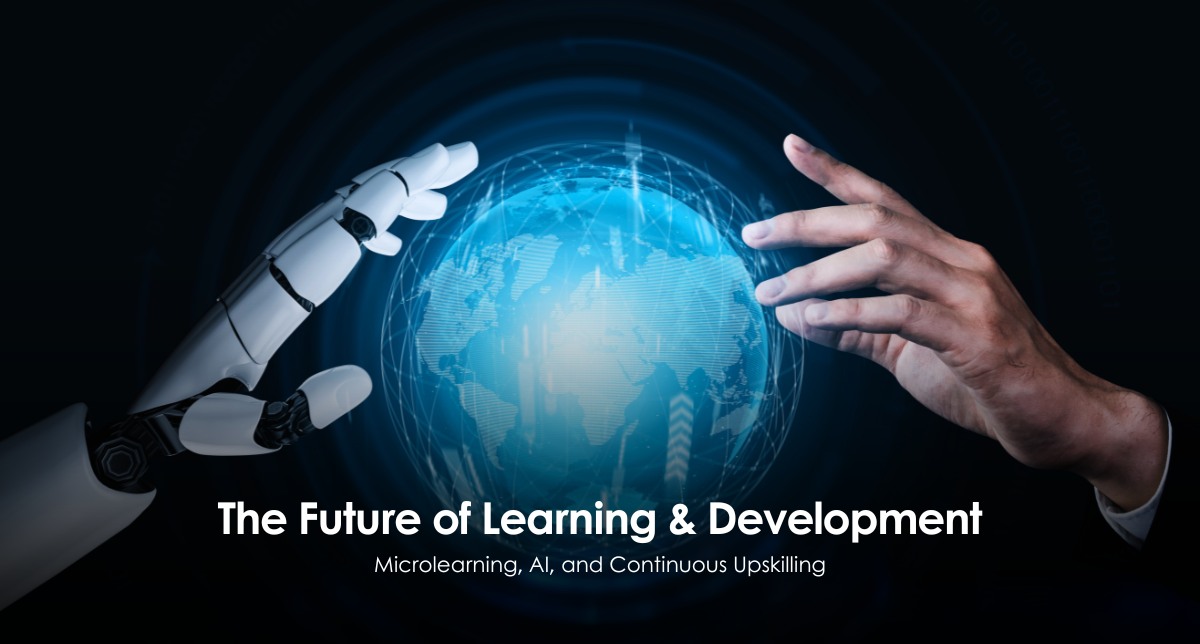
The Future of Learning & Development: Microlearning, AI, and Continuous Upskilling
Traditional workplace training once meant long seminars, endless presentations, and hours of information that employees often forgot soon after the session ended. That approach may have worked in the past, but today’s workplace moves too quickly for outdated learning methods.
Technology changes fast, job roles evolve constantly, and employees expect learning to be flexible, practical, and accessible. Modern Learning & Development (L&D) is shifting toward smarter, faster, and more personalized experiences.
The future of workplace learning is built around microlearning, AI-powered personalization, and continuous upskilling—creating learning experiences that fit naturally into the flow of work.
Why Traditional Training No Longer Works
For years, organizations relied on annual workshops, compliance sessions, and standardized training programs. The problem is that knowledge becomes outdated quickly.
Employees can no longer rely on learning once a year and expecting those skills to remain relevant.
Organizations now need learning systems that:
- Adapt quickly to changing business needs
- Provide continuous skill development
- Support employees in real-time
- Connect learning directly to performance
Companies that embed learning into everyday work are more adaptable, retain talent more effectively, and stay competitive in rapidly changing industries.
From Training Sessions to Continuous Learning Journeys
Modern L&D is no longer about delivering information through one-time events.
Instead, organizations are focusing on:
- Learning tied directly to business outcomes
- Personalized development paths
- Learning integrated into daily workflows
- Continuous growth instead of occasional training
The focus has shifted from simply completing courses to building long-term capability and growth.
Pillar One: Microlearning
Microlearning breaks large topics into short, focused learning experiences that employees can quickly absorb and apply.
Examples include:
- Short instructional videos
- Quick quizzes
- Interactive learning modules
- Cheat sheets and reference guides
Microlearning works because it fits naturally into busy workdays.
Benefits include:
- Better knowledge retention
- Higher engagement levels
- Reduced learning fatigue
- Easy integration into daily work routines
Small learning moments repeated consistently create stronger long-term learning habits.
Pillar Two: AI-Driven Learning
Artificial Intelligence is transforming workplace learning by creating personalized learning experiences.
Instead of forcing employees through identical training programs, AI-powered systems can:
- Recommend learning based on skills and career goals
- Identify skill gaps automatically
- Adapt learning content to individual progress
- Provide timely learning suggestions
This creates more relevant and efficient learning experiences.
Employees receive the right learning at the right time, improving both engagement and performance.
Pillar Three: Continuous Upskilling
In fast-changing industries, continuous learning is essential for long-term success.
Continuous upskilling helps employees:
- Adapt to changing technologies
- Prepare for future roles
- Remain competitive in their careers
- Contribute greater value to organizations
Organizations that build strong learning cultures tend to retain employees more effectively and maintain higher engagement levels.
Continuous learning shifts the focus from simply completing training to ongoing improvement and development.
The Role of Modern L&D Leaders
Today’s L&D leaders do far more than track course completion.
Modern learning leaders are responsible for:
- Designing engaging learning experiences
- Building personalized development journeys
- Aligning learning with business strategy
- Identifying future skill requirements
The role has evolved from administration to strategic workforce development.
Technology Powering Modern Learning
Several technologies are shaping the future of Learning & Development:
- Learning Management Systems (LMS)
- AI-powered learning platforms
- Mobile learning applications
- Virtual and augmented reality training tools
- Collaborative learning platforms
However, technology only succeeds when it improves learning experiences and supports real skill development.
Why Modern L&D Matters for Business
Organizations that invest in modern learning strategies benefit from:
- Faster workforce adaptability
- Stronger leadership pipelines
- Improved employee retention
- Higher engagement and productivity
- Better long-term competitiveness
Learning becomes more than a requirement—it becomes a strategic advantage.
Common Challenges in Modern Learning Strategies
1. Information Overload
Too much content can overwhelm employees. Organizations should focus on relevant and curated learning experiences.
2. Low Engagement
Learning must feel useful and integrated into work—not like an additional burden.
3. Lack of Business Impact
Learning initiatives should connect directly to measurable performance outcomes.
4. Resistance to Change
Some employees may struggle with new learning approaches. Gradual implementation and support help improve adoption.
The Future of Learning & Development
The future of workplace learning will become even more integrated into everyday work.
Organizations are moving toward environments where:
- Learning happens continuously
- AI predicts future learning needs
- Employees learn collaboratively
- Skill development becomes part of daily workflows
The goal is not simply course completion—it is continuous capability growth.
Final Thoughts
The future of Learning & Development is not about delivering more training sessions. It is about creating meaningful learning experiences that help employees grow continuously.
Organizations that embrace microlearning, AI-powered learning, and continuous upskilling will build stronger, more adaptable, and future-ready workforces.
These organizations will not simply keep up with change—they will lead it.
FAQs
What is microlearning?
Microlearning delivers short, focused learning content designed for quick understanding and practical application.
How does AI improve workplace learning?
AI personalizes learning experiences by recommending relevant content based on employee skills, progress, and goals.
Why is continuous upskilling important?
Continuous upskilling helps employees stay relevant as industries, technologies, and job roles evolve.
Is modern Learning & Development only for large companies?
No. Small and mid-sized businesses also benefit from flexible, personalized learning strategies that improve workforce adaptability.
How can organizations measure learning success?
Organizations can measure success through skill improvement, employee engagement, performance outcomes, and business impact.
Leave a comment: