

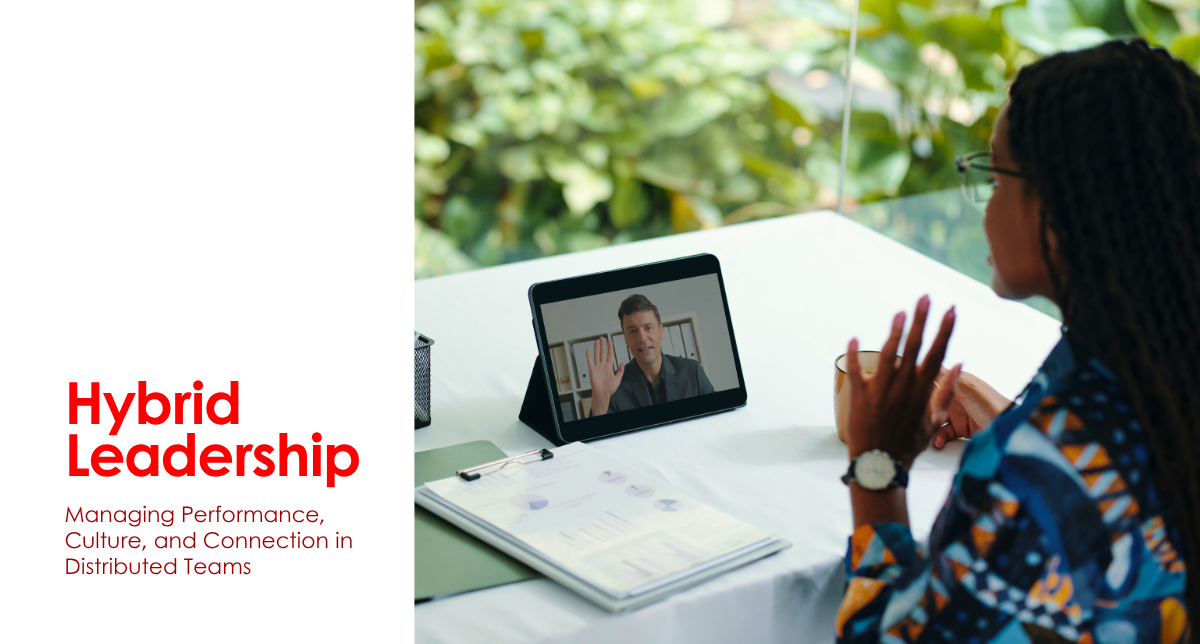
Hybrid Leadership: Managing Performance, Culture, and Connection in Distributed Teams
Remember when leadership meant walking around the office, catching up with people, and sharing quick moments over coffee? That still happens—but for most teams today, it’s no longer the norm.
Teams are now distributed across homes, cities, and even time zones. Some people start early, others late. Some thrive in quiet focus, others bring energy to every meeting. This is the reality of hybrid work—and it calls for a different kind of leadership.
Hybrid leadership isn’t just about flexibility. It’s about managing performance, sustaining culture, and building real connection—no matter where people are working.
Hybrid Leadership: A New Way of Leading
Hybrid leadership requires intentional effort. The informal interactions that once built relationships and recognition don’t happen naturally anymore.
Leaders now need to create those moments deliberately—through structured communication, consistent recognition, and purposeful engagement.
Research shows that teams led with adaptive and intentional approaches perform better and recover faster from challenges. In hybrid environments, leadership is no longer passive—it’s proactive.
The Three Core Priorities of Hybrid Leadership
Leading a distributed team comes down to balancing three essential elements:
- Performance – Delivering results and achieving goals
- Culture – Maintaining shared values and team identity
- Connection – Building trust and relationships across distance
1. Driving Performance Without Micromanaging
In traditional offices, visibility often shaped perceptions of productivity. In hybrid environments, that approach no longer works.
Strong hybrid leaders focus on outcomes, not activity.
Key practices include:
- Setting clear expectations and defining what success looks like
- Measuring results rather than hours worked
- Using tools to track progress—not monitor behavior
- Encouraging ownership and accountability
When leaders prioritize trust over control, performance improves and teams become more self-driven.
2. Building Culture Intentionally
Culture doesn’t disappear in hybrid work—it just requires more effort to maintain.
Without intentional action, remote employees can feel disconnected or overlooked.
Effective ways to build culture include:
- Consistently reinforcing company values
- Recognizing both big wins and everyday contributions
- Creating shared rituals such as weekly check-ins or team sessions
- Ensuring remote employees are included in all activities
Strong culture comes from shared experiences and open communication—not physical proximity.
3. Strengthening Human Connection
Connection is what keeps teams engaged. Without it, people begin to disengage and drift.
Hybrid leaders must create opportunities for connection that replace informal office interactions.
This can include:
- Regular one-on-one check-ins focused on both work and well-being
- Virtual social interactions such as informal chats or team hangouts
- Authentic communication that encourages openness
- Actively listening to feedback and responding to concerns
Connected teams collaborate better, perform better, and stay longer.
From Control to Coaching
Hybrid leadership requires a mindset shift—from managing tasks to coaching people.
Instead of controlling workflows, effective leaders:
- Remove obstacles that slow teams down
- Empower individuals to make decisions
- Support learning and growth
- Build trust through consistency and transparency
Leadership today is less about supervision and more about enabling success.
Using Technology the Right Way
Technology plays a critical role in hybrid work—but only when used effectively.
The goal is to simplify work, not complicate it.
Best practices include:
- Using communication tools that keep conversations flowing
- Implementing simple project tracking systems
- Encouraging collaboration through shared platforms
- Collecting feedback through quick surveys and pulse checks
Too many tools can create friction. The right tools create clarity.
Measuring Hybrid Success
To understand if hybrid leadership is working, organizations should look for:
- High employee engagement
- Consistent performance and goal achievement
- Active participation from all team members
- Low turnover and strong retention
- Ongoing collaboration and idea sharing
If these signals weaken, it’s time to reassess and adjust leadership approaches.
Common Challenges and How to Handle Them
- Communication gaps: Reinforce messages across multiple channels
- Isolation: Increase regular check-ins and connection points
- Disengagement: Recognize contributions and involve team members
- Burnout: Encourage boundaries and balanced workloads
Addressing these early prevents larger issues later.
The Future of Hybrid Leadership
Hybrid work is not temporary—it is the future.
The most effective leaders will:
- Balance flexibility with accountability
- Use data to inform decisions while leading with empathy
- Prioritize people over processes
- Make connection a continuous priority
Hybrid leadership is not about managing locations—it’s about building belonging and delivering results in a distributed world.
Final Thoughts
Leadership today is no longer defined by physical presence. It is defined by how well leaders create alignment, connection, and purpose across distance.
When done right, hybrid leadership doesn’t weaken teams—it strengthens them.
FAQs
What is hybrid leadership?
Hybrid leadership involves managing teams that work both remotely and in-office while maintaining performance, culture, and connection.
How do you measure performance in hybrid teams?
Focus on outcomes and results rather than time spent working. Clear goals and accountability are key.
How can leaders maintain culture in hybrid work?
By creating shared experiences, reinforcing values, and ensuring inclusive communication across all team members.
What are the biggest challenges in hybrid leadership?
Common challenges include communication gaps, employee isolation, disengagement, and burnout.
What makes an effective hybrid leader?
Strong communication, empathy, adaptability, trust-building, and the ability to use technology effectively.

Leave a comment: