

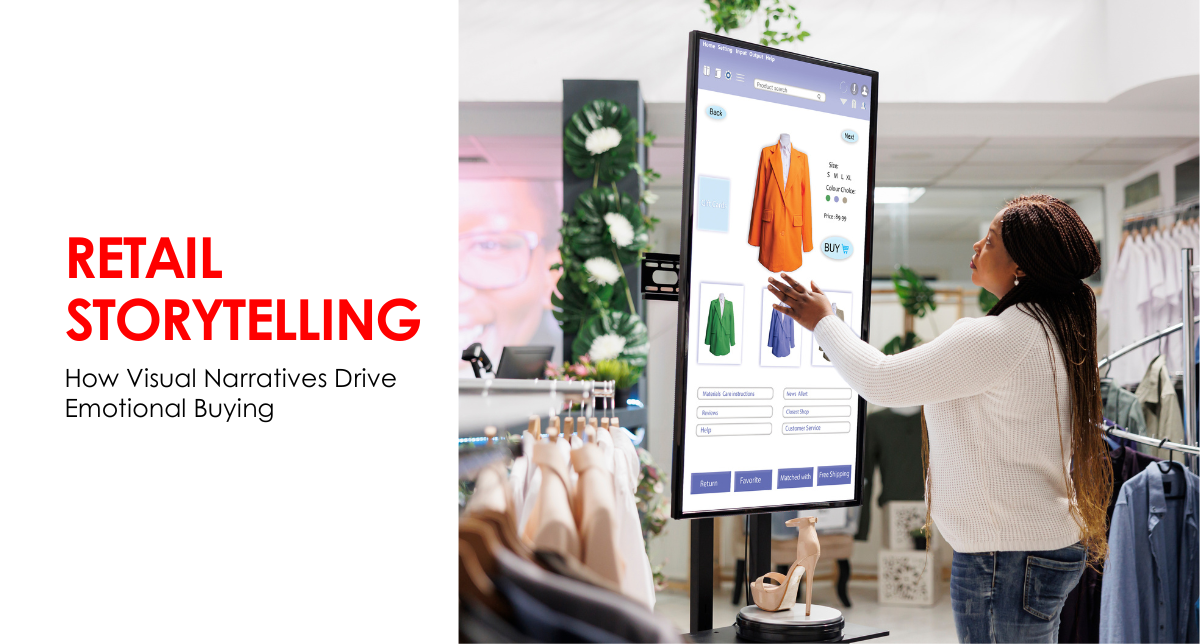
Retail Storytelling: How Visual Narratives Drive Emotional Buying
Walk into a store that truly captures your attention, and you feel the difference immediately. It’s not just about neatly arranged products or promotional signage—it’s about the story the space tells.
From cozy winter window displays to vibrant summer setups, the best retail environments go beyond showcasing products. They create moods, evoke emotions, and help customers imagine experiences. This is the essence of retail storytelling.
In today’s competitive landscape, storytelling is not just a creative choice—it’s a strategic necessity.
Why Storytelling Matters in Retail
Stories have the power to connect deeply with people. They make experiences memorable and influence decisions.
In retail, storytelling bridges the gap between products and emotions. Instead of asking, “Do I need this?” customers begin to think, “I want this to be part of my life.”
Emotionally engaged customers tend to:
- Spend more
- Stay loyal to brands
- Recommend products to others
- Return for repeat experiences
Retail storytelling transforms shopping into an experience rather than a transaction.
From Product Displays to Visual Narratives
Traditional merchandising focused on product placement, pricing, and promotions.
Modern retail storytelling shifts the focus toward experience and lifestyle. It answers not just what is being sold, but how it fits into a customer’s world.
Instead of displaying items in isolation, brands now create immersive narratives that bring products to life.
Pillar 1: Build a Strong Theme
Every effective retail story starts with a clear theme.
This theme influences:
- Window displays
- Color palettes
- Product groupings
- Store layout
- Decor and props
Examples of themes include seasonal celebrations, lifestyle aspirations, or cultural moments. A strong theme allows customers to instantly understand and emotionally connect with the space.
Pillar 2: Guide Customers Through Visual Flow
Like any story, a retail space should have a natural progression.
Visual flow helps guide customers from entry to checkout through:
- Strategic lighting
- Clear pathways
- Feature displays
- Signage and focal points
Key products should act as “heroes,” while supporting items enhance the narrative. A well-designed flow ensures customers don’t wander aimlessly—they move through a curated journey.
Pillar 3: Create Emotional Impact Through Design
Design elements bring the story to life and deepen emotional engagement.
Important components include:
- Color: Influences mood and perception
- Texture: Adds depth and realism
- Props and Decor: Build context and personality
- Lighting: Sets tone and highlights key areas
When these elements align, customers feel immersed in the experience—not just surrounded by products.
Pillar 4: Use Layout to Support the Narrative
The store layout plays a crucial role in storytelling.
Different layouts serve different purposes:
- Grid layout: Efficient and structured shopping
- Free-flow layout: Encourages exploration and discovery
- Loop layout: Guides customers through a complete journey
A well-designed layout ensures the story unfolds naturally, keeping customers engaged while highlighting key products.
Pillar 5: Add Digital Enhancements
Modern storytelling extends beyond physical displays.
Digital elements can enhance engagement through:
- Interactive screens
- QR codes with additional content
- Augmented reality experiences
- Video storytelling
Blending physical and digital experiences creates deeper engagement and makes the shopping journey more memorable.
Business Impact of Retail Storytelling
Effective storytelling delivers measurable results:
- Increased foot traffic
- Longer in-store dwell time
- Stronger emotional connection with customers
- Higher conversion rates
- Improved brand recall and loyalty
When customers feel something, they are more likely to act.
Common Mistakes to Avoid
1. Overcomplicating the Story
Too many elements can overwhelm customers. Keep the message clear and focused.
2. Lack of Consistency
Different themes across sections can confuse shoppers. Maintain a unified narrative.
3. Ignoring the Target Audience
Stories must resonate with the intended customer base to be effective.
4. Static Displays
Unchanging displays lose impact over time. Refresh storytelling regularly.
The Future of Retail Storytelling
Retail storytelling will continue evolving with technology and customer expectations.
Future trends include:
- Personalized in-store experiences
- Augmented and virtual reality integration
- Localized storytelling for different markets
- Sustainable and eco-conscious display design
- Data-driven visual storytelling
Successful brands will combine creativity, authenticity, and innovation to create meaningful experiences.
Final Thoughts
Retail is no longer just about selling products—it’s about creating moments.
When storytelling is done right, customers don’t just shop. They experience something memorable, emotional, and meaningful.
And in the end, people may forget what they saw—but they will always remember how it made them feel.
FAQs
What is retail storytelling?
Retail storytelling is the use of themes, visuals, and store design to create a narrative that connects emotionally with customers.
How does storytelling influence buying behavior?
It creates emotional connections that make customers more likely to purchase, engage, and return.
What are the key elements of retail storytelling?
Theme, layout, visual flow, design elements like color and lighting, and digital integration all contribute to effective storytelling.
Can small retailers use storytelling?
Yes. Even simple displays with a clear theme and thoughtful design can create strong storytelling experiences.
How often should retail storytelling be updated?
It should be refreshed regularly—typically each season, campaign, or major promotional period.
Leave a comment: